27 January 2012

My Electric Bills in Journal Article Format (Of Course)

Introduction
     It has been more than 8 months since I moved into my own apartment for the first time.  I hate getting superfluous postal mail, so I signed up for electronic billing through Indianapolis Power and Light (IPL) at the first opportunity when I moved back into Indianapolis from nearby Greenwood, IN.  I was on a mission with my energy consumption which was fueled by a few of my character traits:  the incredibly cheap and practical aspect that makes me seek to consolidate and reduce whenever possible, the scientist in me who likes to run "experiments" then collect and analyze "data," my major professional passion for ecology and environmentalism, and my side interest in energy efficiency.
     In this exercise I've managed to touch on all of these aspects of my personality.  I've provided some descriptive graphs to let you into my world a little bit, and from them you'll see both my tendencies to penny-pinch and to lean toward less environmentally-exhausting lifestyle changes (particularly practical/inexpensive/easy ones).  Even if we're able to incorporate less harmful energy sources - e.g. renewable wind energy rather than the vast majority of electricity generated by burning coal in Indiana - I think it's a no-brainer that we should seek to reduce our energy consumption drastically as well.
     Among my major goals were to reduce my energy consumption (both compared to my previous living arrangements and on a month by month basis moving forward) and in turn reduce my energy bill.  I wanted to take at least some baby steps toward a cleaner energy source, and enrolling in the Green Power Option (a whole $0.00100/kWh = it costs me a quarter a month, give or take) was a very affordable step on the dream path that ends with off-the-grid solar/wind energy in my home.

Methods
     The pdf files of all of my bills were accessible online via my IPL account (they keep something like your last 12 or 13 bills on file there), and I collected the following values each month: bill date, bill amount ($), kWh of energy used, number of days in billing cycle, and cost of my 100% opt-in for renewable energy preference.
     A straightforward calculation was done to normalize the data, as it became skewed by variations in the number of days per billing cycle, which ranged from 27 to 34 days: 

Daily Energy Use (in kWh/day) = (Total consumption in billing cycle)/(Number of days in billing cycle)

     By dividing the amount of energy consumed (in kWh) over a billing cycle by the number of days counted in that billing cycle, I could compare my energy consumption month by month in terms of energy consumption per day.

Results

Figure 1 - Summary of data obtained from my last 8 energy bills.
Left: The y-axis (vertical) is multi-purpose here, representing the cost of my monthly bills (red squares and line) in US dollars, the cost of the IPL Green power pro-rate on those bills (green triangles and line) in US dollars, and the amount of energy consumption metered for my apartment (blue diamonds and line) in kilowatt-hours per day.  I've met my goal of generally trending downward in consumption and cost, but the amount of money going toward green energy is difficult to determine here, except that it shows that it's a small fraction of the cost and it amounts to just pennies a month.
Right:  Because the green energy pro-rate is hardly detectable in the figure at left, I made another just to show how much is actually going toward it.  Here the y-axis is US dollars, and therefore it is clear that since my first payment into the Green Energy Initiative (27 cents in July 2011), my cost here has declined right along with the consumption and monthly balances.

Discussion
     There are a couple of things I'd like to draw out of the above results.  First, recall that among my goals were reducing both my energy use and the amount I pay.  Despite a slight increase in my most recent statement, the general trend is certainly downward with respect to my daily energy usage (blue diamonds in the Figure).  I paid a four-month high for my energy last month, but this was due to an unusually long billing cycle.  Otherwise, my downward trend is satisfactory.  And believe me, people tend to be inspired (or at least jealous) when you say that your energy bill is consistently under $30. 
     We're nearing February - the month during which almost all the bad storms I recall from the last 5 years have occurred - but so far my furnace hasn't run all winter.  It has been unseasonably warm at times, but even the cold temperatures have been manageable with a sweatshirt or extra blanket.  Not surprisingly, my high months were July and August - air conditioner season - but note that I paid only a little more those months and not double and triple like some folks do to stay comfortable.  Believe me, if you'll re-evaluate your comfortable temperature (think of it particularly in relation to how much it will cost you) you may agree that using the A/C sparingly (and for only an hour at a time) is enough supplement to box fans and basketball shorts for the reward of a reasonable and predictable energy bill at the end of the month.  Now that it's late January, I don't long for any of the cooling energy I didn't use last summer.
     The other thing on my mind, and it may be clear from the Figure (especially at left), is the fraction-of-a-fraction of my bill that I'm charged extra to be enrolled in the Green Power Option.  On one hand, this is great for me because it's both a predictable and affordable surcharge.  On the other hand, I can afford more (albeit not a lot more) than a quarter a month for something I care about as a consumer, yet I have maximized my possible level of enrollment in the program.  I know that IPL takes pride in having such a low cost to participate, but I wonder if there are ways to better include the people who want to do more.  I'm certain that, particularly if IPL were to provide a clear and itemized sales pitch to interested customers, they could convince many of us to opt-in for more than the 100% maximum.  I say keep the rate the same in order to generate new interest, but if the company takes further steps toward showing a commitment to renewable energy then customers should be happy to go beyond 100% participation.  In fact, let someone like me pay 400% if I choose, since my bill is already low.  This way I would still pay less than $1/month extra yet the process might be sped along as my involvement essentially "sponsors" 1-3 additional consumers.  Plus, any more research and presentation IPL does to expand the opportunities provided by their Green Power Option, the more likely they'll be to find new participants as well.

Conclusion
     I hope any interested reader takes from this snapshot of my energy consumption that cost and energy-saving steps do pay off: less A/C and heat, fans and blankets as necessary, unplugging appliances when not in use.  I didn't install a programmable thermostat in my apartment, but investments in devices like this or in power strips to consolidate and shut off energy drawn from outlets can have great returns without the level of diligence necessary to monitor everything like I have had to do. 
     To any IPL customers who happen to stumble upon this, I hope you'll be interested in the Green Power Option, enroll with me and follow its development.  I'd love to discuss the possibilities for the program to go further as well as alternative ways to support renewable energy.  If you live in Indiana, remember that almost all of our electricity is derived from coal burning, so it is going to take some bottom-up efforts from the public to help push renewable energy in Indiana toward viability and then competitiveness.  I find inspiration when I drive by the mountain of coal to be burned at the power plant on South Harding Street here in Indianapolis, or when I see a monthly bill that was a half-dollar less than the one before.  I hope our city as a whole is inspired to lay down a cleaner energy grid for the future, but if we're not inspired we should at least choose to be responsible.

Suggested Reading
Living Like Ed by Ed Begley, Jr. - Ed's a Hollywood actor who has long been on the cutting edge of environmental activism and "green" living, and this book really hit the spot when I first developed my interests in energy efficiency.  He is incredibly clear, helpful, and practical and this book is suitable for folks of all income and interest levels.

17 January 2012

E! True Hollywood Story: Planarians

Above:  The cruel price of fame for a young, famous and fast-living Planarian.  Trading in microscope lights for camera flashbulbs, constant scrutiny and pressures to be a role model mixed with the high highs of success make for a bumpy ride for the celebrity.  Not actually sure why I drew this but it's somehow better than finding a license-free pic of a flatworm.
Phylum = Platyhelminthes (phylogeny)
Layered tissues x3 (triploblasty) - endoderm, mesoderm, endoderm
Acoelomate - no body cavity
Nuclei abound - syncytial tegument
Anatomy of digestion = mouth/pharynx/gastrovascular cavity
Representative genus = Dugesia
Intestinal cavity w/ diverticula
Aquatic, free-living carnivores
Not to be confused with segmented flatworms (e.g. tapeworms)
Sense w/ auricles and eyespots

In the freshman biology lab I teach, I stress the importance of organization and study skills as much as I push the course material to my students.  The reason being that 100-level courses (at least in my experience) can actually be the most difficult to prepare for, given the enormous range of information they often cover.  I was toying around with different ways to present information and put myself to the challenge of creating a mnemonic.  In the first week of lab, we covered a few protists as well as cnidarians and flatworms.  Planarians (a common name for organisms found in Class Turbellaria of the flatworm Phylum Paltyhelminthes) were the most reasonable to work with, but I obviously had to take some liberties with wording.

Playing off the letters P-L-A-N-A-R-I-A-N-S, I managed to squeeze into an impractically complicated device most of the distinctive features that the students are expected to know about the Turbellarians (and, often, Platyhelminthes in general).  Certainly not all, and it doesn't begin to help with drawings, microscope slides, etc.  For the record, the same exercise feels doable with CNIDARIANS but it'd take a more experienced scientist than me to solve the PLATYHELMINTHES puzzle. 

I might use this space to check in with my teaching assignment semi-regularly this semester.  It's a handy opportunity for me to review, plus I think it's an interesting way for non-science majors to see what they're missing (in a relatively enjoyable way) and for biologists like me to look back and see a snippet of the incredible amount of information we learned in the average week/lab/semester, even very early in our undergraduate careers.  It's definitely easier to appreciate in retrospect and from the point-of-view of exam-writer instead of exam-taker.

10 January 2012

Impromptu Sightseeing

There are plenty of swirling ideas that aren't coming together enough for even a blog post at the moment.  The first week of school is a busy, busy time, and the possibility of it being the last first week of school I ever have gives me mixed feelings.

Anyway, we did knock out an expiring Groupon over some chili downtown tonight, and we used the extra hour left on the parking meter to walk off the dinner and explore areas of downtown that I'd never seen in great detail.  Hannah and I made a ton of great discoveries, but I'll let the burden of the blog post be carried by what was probably my favorite find.

I need to make it a point to explore downtown Indy on foot more often.  There were some pleasant surprises on a quick post-dinner stroll earlier tonight, including the former home of the Indiana State Museum on the northwest corner of Alabama and Ohio Streets.  Awesome eagle statues, lighting, architecture and doors.  I tried to get pictured with that last feature, but I think a return trip in the daylight will make that task more successful.

04 January 2012

Review by Haiku: Religious Theorists

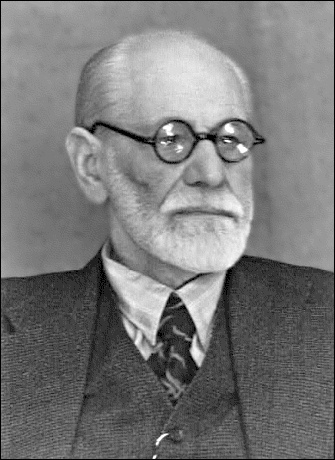
Among his "facts," Freud borrowed Ernst Sellin's discovery that that "the Jews, who even according to the Bible were stubborn and unruly towards their law-giver and leader [Moses], rebelled at last, killed him and threw off the imposed Aton religion as the Egyptians had done before them" (Freud's Moses and Monotheism, 98).
Seeing the desperate need for a short creative exercise after some lengthy posts, I've decided to give brief (Haiku) summaries of a few of the more interesting religious theorists I read last semester and their ways of defining "religion" - this is how I intend to remember them, anyway.

Durkheim seemed to think
religion's social but the
people aren't aware

Freud's myths meant to show
religion is neurosis
and Jews killed Moses

Otto's numinous
faked words like mysterium
tremendum, the hell?

Bruce Lincoln's four themes
are "discopraccomminst" if
they're slapped together

The scary thing is I managed to write somewhat coherent, full-on essays describing all four of these theorists.

Further Reading
  The copy of Moses and Monotheism from which I pulled the quote is available in electronic form: http://www.ebooks-for-all.com/bookmarks/detail/Moses-And-Monotheism/onecat/0.html 

Photo Credit
   http://www.wpclipart.com

01 January 2012

Fear Should Be Afraid This Year

So far I'm having a reasonable amount of success with my new approach to 2012.  Maybe you could call it a resolution, but really what I have is a stubborn refusal to succumb to the negative forces that I have identified as my greatest enemies from 2011.  We all have negativity that we're stuck dealing with, whether our responses are to acquiesce to it as it builds or search and destroy it.  With the flip of the calendar year, I have set to make the transition from the former to the latter.

My major negative forces in 2011 - Fear, Diffidence and Excessive Consideration - all thread together to form the itchiest, most aggravating fabric of the personality that I happen to wear. 
 
Fear has always had a grip on me, big time.  It's fear which has dictated a substantial proportion of my actions, particularly crippling fears of confrontation and failure.  I can be a totally neurotic mess, particularly over the three-headed monster of school (research/class/teaching), and as any one of those demanding mouths is fed the other two become hungrier and thus more aggressive.  The aspect of my school most ignored has been research, which goes fine but has been starved for attention in comparison with the other two.  I fear the most imminent deadline at any given time.  In 2012, the research finally is the major deadline.  Good for it.  But I will stubbornly refuse to fear it.  In some very real ways I need a successful semester of research, but I've realized in many ways I just don't.  I've seen people whose whole livelihoods are seemingly built upon their research.  But since I have no desire to place a similarly astronomical level of priority on the research in the long run, I fail to see the sense in fearing for all my life as if it is defined solely by the research for a Masters thesis.  I can complete my research and do exemplary work without giving it such power, and in 2012 I will do just that.

In a similar vein, the same fear of which I speak has had tremendous shaping effects on how I regarded myself and others in 2011.  I noticed improvements on which I hope to build this year, but as a whole I treated my own health and feelings with incredible Diffidence and operated with Excessive Consideration in my dealings with undeserving situations and people.  In either case, I was the major loser because of my backwards priorities.  By having blatant disregard for my own physical and mental well-being, I was a total crowd-pleaser in 2011.  I convinced myself that I was out of line when I felt compelled to do anything but shut my mouth, work myself to exhaustion, break every rule of sound nutrition and kiss ass as necessary.  I valued my own feelings and warning signs less than always saying yes, chasing inconsequential gradebook points in inconsequential classes, and acting like I wasn't miserable for it.  My major concerns and considerations were plenty selfish, but they were paid to external factors.  Rather than face the consequences of having any degree of self-respect and autonomy in the face of demanding factors and people, I subjugated myself and was prompt, polite, thorough, and downright helpful to faults.  In 2012, I won't abandon good qualities like some of these listed, but they will be placed back at reasonable rates of exchange with my personal health and self-respect.  If I have to be less accommodating to others in order to look at myself in the mirror, then it's a decision that I can (and others will have to) finally respect.

In 2012, I'm going to inflect not only on years past but also to uncover my true feelings as life unfolds.  Where before it has been easier just not to ask, I will be responsible for answering to and achieving balance that incorporates my previously suppressed drives for better physical and mental health.  I'll continue to fear some things, I can't become superhuman, but I can level out my responses to fear by not defaulting to diffident and excessively considerate actions.   

Ultimately, I know I'm unique neither in my particular set of hindrances nor in the fact that I have room to improve this year.  What I hope someone who reads a brief analysis like the preceding is able to take away is the confidence and excitement to identify, describe, and devise solutions to problems of their own.  Fear, especially, is a powerful thing, but it's not everything, and I hope folks really take the opportunity that 2012 provides to reflect, inflect, and change their undesired aspects.  In my own case, the battle feels demystified and increasingly well-in-hand now that I've acknowledged my most debilitating problems rather than pretending I never had them.

Happy New Year

30 December 2011

Visions of Lilith (Adam's First Wife)

This past semester was the first in which I was exposed to any characteristically feminist scholarship, and I found a lot of interesting points made by authors chosen for both my religious theories and religious ethics courses.  I found these perspectives generally illuminating, and I wasn't overpowered by any of my preconceived concern that it would be primarily focused on bashing the behavior of men with whom I don't necessarily relate anyway.  Rather, it seemed that a lot of the grievances contend with general disregard for/ignorance about women's perspectives and abilities, rather than male aggression toward women.  I found myself pleading ignorance or acquiescent guilt to sex role-assumptions and implicit attitudes upon which I was raised, and thus I found most of the charges made by feminist authors like Darlene Juschka, Mary Daly, and Judith Plaskow to be quite fair. 

While in some essays she does take fairly radical/progressive stances, I was struck in my early reading of Plaskow - who is a scholar of Jewish feminism - by her midrashic description of Lilith, the first wife of Adam.  She rightfully provides "a new" (in other words, "recovers women's") perspective in The Coming of Lilith, identifying her as strong, beautiful, sisterly, and completely human (this last point is indeed relevant).  I was surprised, though, upon reading the Talmudic renditions of Lilith, that Plaskow could resist tearing these rabbis apart.  Certainly, she conveys a strong and more positive message by keeping her focus on the recovered version of Lilith, but more allusions to the fairly horrific Talmudic Lilith character might have further reinforced the need for Plaskow's midrash.

I'm still working through some ideas to read more into Plaskow's essays and bring them into conversation with other modern feminist theologians.  For now, though, I thought it might interest others to read a recap of some of the vivid language through which Lilith has been described.  The following is an informal, late-night summary/reaction paper to a weekly reading assignment in my ethics class from a few months back.

Plaskow’s vs. the Talmudic Lilith

           Plaskow calls her Coming of Lilith story a midrash – “a form of biblical interpretation that often begins from a question, silence, gap, or contradiction in a biblical story and writes the story forward in response to the interpreter’s questions” (85) – of the original Talmudic midrash of Lilith.  While she is clear about the significance of writing the Coming of Lilith 23 years prior, her reflection on the piece reinforces its continued benefits and meanings for her and other feminist theorists today.  Even though she admits that she appropriated the story of Lilith more for how the character fit the bill of helping interpret the feminine experience, I think she could have said more about just how different her depiction of Lilith was from Talmudic descriptions.  Her motivations were not directly reactionary to the Talmudic moods surrounding Lilith, but Talmudic depictions reinforce just how much of a leap forward Plaskow’s Lilith makes with respect to themes of strength and sisterhood as well as understandings of her (or woman’s) qualities and place in the world with Adam (or man) and God.
            The prevailing themes differ vastly between Plaskow’s story of Lilith and that which was developed through Talmudic writings.  Where Plaskow focuses on positive connotations and traits for Lilith and her legacy, readings from the Talmud paint a much more negative picture.
            Plaskow’s Coming of Lilith (30-31) introduces a Biblically-set, mythical example of women made stronger by sisterhood.  Lilith is Adam’s first wife – predating the creation of Eve – and she is self-respecting in the face of Adam’s power moves.  Not “one to take any nonsense, [Lilith picked] herself up, uttered God’s holy name, and flew away” (31).  She would not stay away forever, though, and sometime after Eve is created Lilith makes two unsuccessful attempts to return – not passively but aggressively, by force – to the garden (31).  On the second occasion, “Eve [gets] a glimpse of her and saw she was a woman like herself”, and months later Eve acts upon her own curiosity by muscling her way over the wall and out of the garden.  Over the course of many meetings, Lilith is welcoming to Eve and the two develop a strong sense of sisterhood over shared teachings, stories, laughter and tears (32).
            The strengths possessed by the Talmudic Lilith are much less enviable.  She has no intentions of returning to the garden, and strikes a troubling deal to stay in exile.  Having been, in her own attributed words, “created to strangle newborn infants,” Lilith trades the lives of 100 of her “demon offspring” daily in return for the right to prey upon infants whose amulets do not bear the protective names of three angels working for God (216).  Her ability to negotiate and generally have her way, as the original woman, is less of a boost to the perception of all women to follow when the terms guarantee death and destruction motivated by bloodlust.  Lilith’s sexual lust is described in predatory terms, too, as she seeks to seduce men – especially the best among them, as in the example of Rabbi Elimelekh of Lizhensk (219) – and steal their seed (217).  Thus, the Talmudic depiction of the first woman unmistakably lists seduction among her powers, with high murderous and lustful capacities as well.  The descriptions of her interactions with men are immoral or even evil, while importantly her interactions with women are unaddressed.
            The stories also differ in meaningful ways with regard to Lilith’s identifying features and how she is described in relation to Adam and God.  Lilith is made, with Adam, of dust in the same creative act of God, and she does not signify the subordination of woman (or, analogously, community) to man (or Jesus).  She is a link, with Eve, in the first community building efforts in the women’s experience but her status as an equal to Adam in all ways precludes justification of her subordination, even if Adam himself is displeased with Lilith’s “uppity” nature (31).  In fact, it is Lilith and Eve who are in such a position of power with their sisterhood that they instill expectancy and fear in God and Adam for the day that the women would return to the garden (32).  To these very clear descriptions of a more represented and equal (even powerful) womanhood I must add one subtlety that I found to be personally meaningful.  While Plaskow does not strip God of the male gender and pronouns typical of God-language (44) – a conscious decision she defends retrospectively (82) – she does make an alteration that I saw in the Coming of Lilith for the first time.  The “Adam and Eve” duo with which I am so familiar is instead addressed as “Eve and Adam” (31).  While it is a subtle difference, it was so novel in appearance that – perhaps indirectly indicative of a bias with which I was always taught the story – my first reaction was to the effect of “wait, did I misread that?”  Plaskow’s Lilith is not described in terms of specific features, but instead more generally as “beautiful and strong” in Eve’s estimation, whereas the Talmudic descriptions of Lilith describe her long dark/black (217, 219) or red hair (218) and seductive ornamental (218) or scant (219) attire.  Lilith is still described to have been created from dust but, like Eve, she comes after the lonely Adam (216).  The Talmudic version of Lilith lacks not just equality with Adam but, at times, simple humanity.  Rather than a woman, Lilith is in many places referred to instead as a “witch”, “evil female spirit” (217), “Queen of Demons” (218) and the “incarnation of lust” (217).
            Coming from the long discussion of women’s experience and Lilith in Plaskow’s essays, the short Talmudic excerpts even more dramatically depict a much less favorable, less human understanding of Lilith.  The strength of Lilith and Eve for Plaskow is rivaled by Talmudic Lilith’s influence in sealing deals with murderous terms and seducing men and demons alike, while the sisterhood or community as formed between Plaskow’s Lilith and Eve apparently has no precedent in the Talmud.

Further Reading
   References to Plaskow's work are found in The Coming of Lilith: Essays on Feminism, Judaism, and Sexual Ethics, 1972-2003. Beacon Press, 2005.
   The tone of Talmudic descriptions may well be fairly consistent in any available print of the text.  I don't have a name at hand but I can find the translator(s) of the referenced snippets in my old notes upon request.

28 December 2011

Tried and True, the Self-Interview

Rather than take for granted the likelihood that visitors to this blog (if they ever do show up) for many months or more will be people who know me and want to show their support (or pity) for me, I've decided to throw together a quick icebreaker.  I chose the self-interview, a schizophrenic method popularized by a legitimately crazy person way back in my 10th grade speech class.  His topic was 9/11 - which made his reading of the interview transcript all the more uncomfortable - but I think I'm a light enough topic that the method can be revisited here.

Interviewer:  So, the first question I wanted to ask you (myself?) was, "Why start a blog?"

Donovan:  Great question.  My answer isn't fully formed, but know I want some practice writing on topics and in styles of which my professors/advisers don't really encourage.  Often, their scopes and interests are much too specific, and as I've stated previously I want to make some novel logical connections rather than cut deeper and deeper into familiar, specialized subject matter.

I:  You seem a bit uneasy with this whole interview process.  Would you like a glass of water, or an opportunity to speak freely without prepared questions?

D:  No, no.  (Clears throat)  I can feel the chemistry building.  Next question.

I:  Very well.  Do you have any credentials?

D:  I've completed two bachelors degrees at Indiana University-Purdue University Indianapolis - a BA in biology through Purdue and a BA in religious studies through IU.  I'm currently working on an MS in biology at IUPUI, in which I split my time taking classes, teaching classes (upperclass ecology and freshman biology labs), and doing research (see: literally watching grass grow). 

I:  What visions do you have for this blog?

D:  At worst, it will be a writing journal which people will roll their eyes at when they accidentally stumble upon it.  At best, I would like to think that my sort of mid-range level of education and expertise puts me in a position where I can have conversations and write pieces in such a way that they aren't too pedestrian for academic elites but also are not so specific or technical that they fail to have more universal attraction.  It seems that folks on opposite ends of the educational spectrum often assume that they must choose how/what they read and write in a polarizing (or at least static) manner, while I hope to provide information and opportunities that could draw both toward the center.  Regardless, I've got an outlet to practice some of my writing and articulate the thoughts that are swirling around in my head.

I:  What are some example topics that you're considering bringing into the blog?

D:  The list is substantial, so I'll list just a bunch off the top of my head:  Things I learn/experience as a TA, recaps of articles/books I read and essays I write academically, urban ecology, environmental change, trees, religious history, classic films - esp. film noir, inspiring/intriguing/ridiculous things I hear in an average day in Indianapolis, and sights and stories from trips to nature preserves and parks.  Particularly in season, I'll surely try to force something about baseball into the mix, too.  There are many other ideas in addition, plus I'll be interested in following up on requests or sidebars that come up in the event of discussion ever happening.

I:  Riveting.  I think I speak for all future readers when I say that hopefully you'll be satisfied to stop defining yourself and the blog and just write the thing from now on.

D:  You took the words right out of my mouth.

27 December 2011

Rules I Intend to Break

I'm not sure what all the rules - written or unwritten - of a good blog are.  I know there are lists and guides out there to direct me, but since they can be contradictory or written in styles/on blogs which fail to keep my attention I feel I should just do my own thing and slap a disclaimer on it.

So, in the interest of full disclosure:

1) I don't guarantee that every post will be on the same topic.  In fact, I intend to bounce around.  The term philomath captures the essence of my attitude (philo="loving"; math="to learn").  For some reason, it is in my nature to resist specialization.  Probably because I'm easily bored.  I like fresh questions and answers.  With few exceptions, every class in high school interested me so much that I aspired to study it.  Any given week, I wanted to be a writer, an economist, a chemist, an historian, or a journalist.  Just before college, my latest intellectual captor was biology.  So I got a degree in it.  Then, as soon as I started to get more serious with a Masters program, I decided to tack on a religious studies degree too.  I've spent good money and some of my best years refusing professional pigeon holes.  My blog must be well-rounded or I will let it die.

2) My interests are in numerous topics, yet I'm not going to come at them with excessive political or otherwise opinionated force.  That's not my style.  If I feel strongly about something it will show, but in most discussions with 2+ opposing sides I'll start somewhere near or on the fence, preferring to let the learning process unfold organically.  If I'm inclined toward a certain position on a heated issue, I intend to ask questions first, then seeking answers from outside contributions or my own research.  In the fortunate case that the questions I raise are of interest to others, I hope those with good info will share their findings and feelings.  My lack of dogmatism should be seen as an open door policy - ideas should be developed beyond my endeavors.  I would much rather moderate a discussion than alienate people by assuming an overpowering attitude that I don't even have.

3) Especially with more practice and ideas, I will want to bring my wide ranging interests together in interdisciplinary manners.  I often get chuckles and comments about the fact that I've pursued scholarship in both scientific and religious studies.  The idea that religion and science are utterly incompatible is a perspective I've witnessed from rigid sympathizers of each, but I refuse to start off with the staunch belief that any two subjects at seeming odds cannot be reconciled, at least in part.  I'm optimistic that the language and ideas of any contentious subject can be used to better understand the supposedly contradictory discipline.  Thus, while any given post may be overwhelmingly devoted to forestry, or urban ecology, or Buddhist ethics, or film noir, or baseball, or my teaching experience, or any of countless other subjects, I'll be most satisfied when two or more of my interests can be brought into conversation somehow.  Hopefully, with an influx of new ideas my range of interests will continue to grow, and by connecting ideas and putting unfamiliar/uninteresting subjects in more palatable terms, I can influence some new interests in others and welcome their perspectives.

4) At times, I will probably write exceedingly long blog posts.  Conciseness is a skill which I intend to develop over the course of time.  If you're still with me, you're aware that I've got my work cut out for me.  Part of what I hope has gotten you this far is my use of numbering and meaningful emphasis (italics and underline) on major points of interest.  If I see where it is helpful and applicable, I'll try to break up anything that looks like a ramble into a list form with stylistic emphases.  I'm coming at the blog, initially, from a fairly selfish angle.  I have a lot to gain in this forum.  I have underdeveloped ideas and connections in my head, and I'll be sharing the writing exercises through which I make sense of these loose ends.  I communicate better in writing than oral debate, at least for now, so I'm trying to play to my relative strengths.  Hopefully - especially when I'm presenting a review of facts - I can make the writing economical despite its length, giving you more information per unit of reading effort.  It is my sincere hope that others will come to find some value or opportunity to speak as well in the contexts I provide, but I won't approach blogging like a job with a certain target audience.  I'd love to see well-informed discussion, but rather than write for particular people in this setting I'd like to achieve some variety or universality of ideas and perspectives by making it more generally interesting and accessible.

That should be a fair place to start.  Other than maybe a more straightforward description of the author, more foundational stuff will follow only as necessary.